India’s 1st Startup Consulting Company Earns YouTube Silver Button
India’s 1st Startup Consulting Company Earns YouTube Silver Button
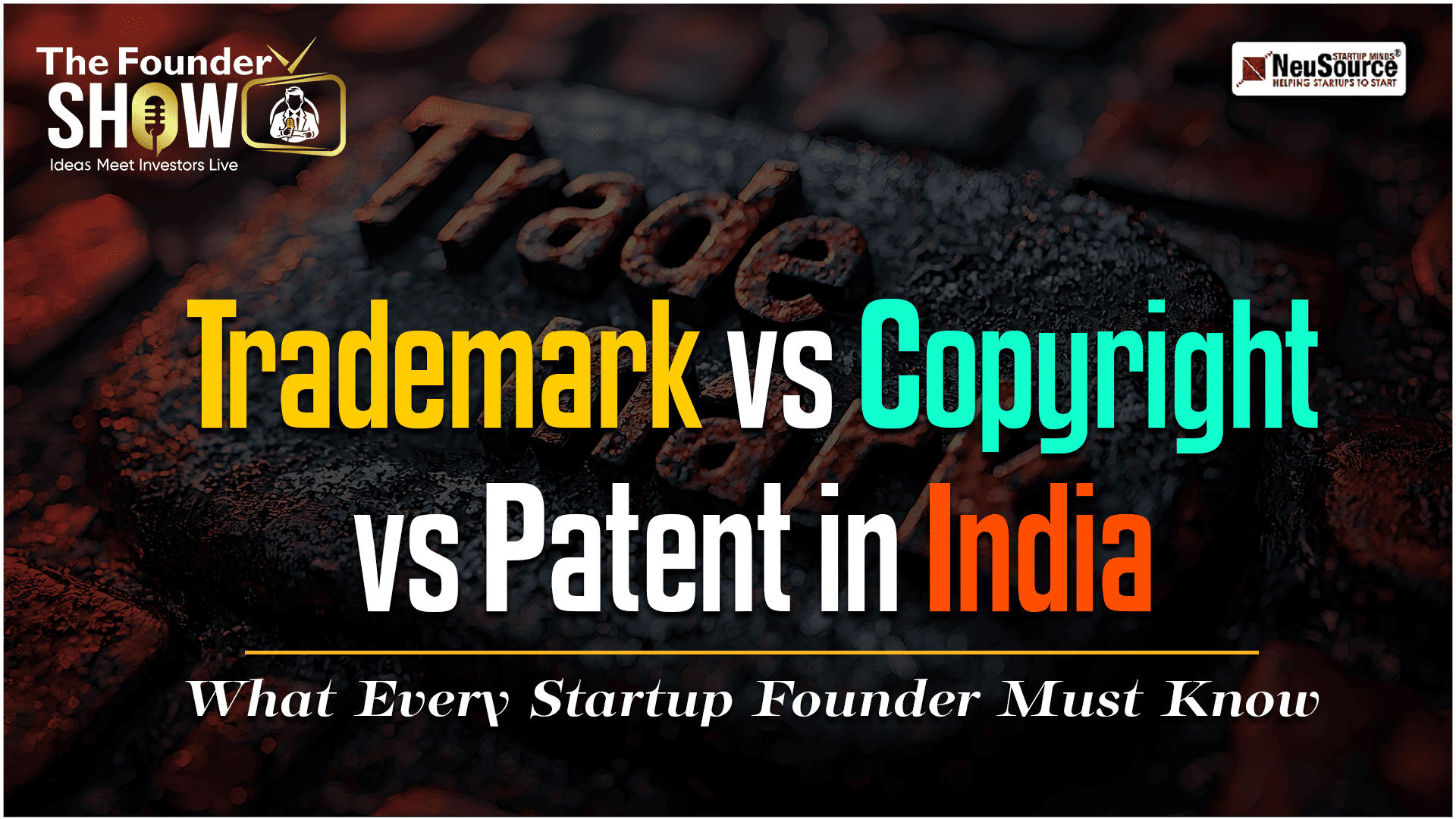
Intellectual property protection is one of the most misunderstood yet critical aspects of building a startup in India. This guide explains the difference between Trademark, Copyright, and Patent, and helps founders decide what to protect, when, and why.
Every startup begins with an idea, but ideas alone do not carry legal or commercial value unless they are protected. One of the most common mistakes early-stage founders make is delaying intellectual property (IP) registration, assuming it can wait until funding or scale.
In reality, investors assess IP readiness far earlier than founders expect. Weak or missing IP protection often becomes a red flag during due diligence.
Intellectual Property refers to creations of the mind that are legally protected. For startups, IP typically includes:
A trademark protects your brand identity. It ensures exclusive rights over elements that customers associate with your business.
A registered trademark is valid for 10 years and can be renewed indefinitely. The registration process typically takes 8 to 14 months, depending on objections and responses.
Every startup that operates under a brand name should register a trademark. This is non-negotiable for founders planning to scale, build visibility, or raise funds.
Copyright protects original creative expression. While copyright exists automatically upon creation, registration provides legal proof and enforcement power.
Copyright protection lasts for the lifetime of the creator plus 60 years. Registration usually takes 2 to 6 months.
A patent protects new inventions or technical processes that are novel, non-obvious, and industrially applicable.
A patent is valid for 20 years from the filing date and cannot be renewed. The complete process may take 3 to 5 years or more.
| Aspect | Trademark | Copyright | Patent |
|---|---|---|---|
| Protects | Brand identity | Creative work | Inventions |
| Examples | Name, logo, slogan | Code, content, design | Product or process |
| Validity | 10 years (renewable) | Life + 60 years | 20 years |
| Cost | Low to Medium | Low | High |
For most startups, trademark registration should be the first priority, followed by copyright if software or content exists. Patent filing should be considered only when innovation is core to the business.
Investors evaluate IP to understand defensibility, ownership, scalability, and long-term value creation. Weak IP directly impacts valuation and funding confidence.
Neusource Startup Ecosystem supports founders with trademark registration, copyright filing, patent advisory, IP strategy alignment, and investor-readiness compliance.
Intellectual property is not a legal formality. It is a business asset, a defensive shield, and a critical investor confidence signal.
Ideas attract attention. IP protection attracts investment.
18 Dec
The internet offers opportunity, but only strategy builds success. Don't just exist online—dominate. Choose Neusource to craft your digital footprint and lead your business to its peak.