India’s 1st Startup Consulting Company Earns YouTube Silver Button
India’s 1st Startup Consulting Company Earns YouTube Silver Button

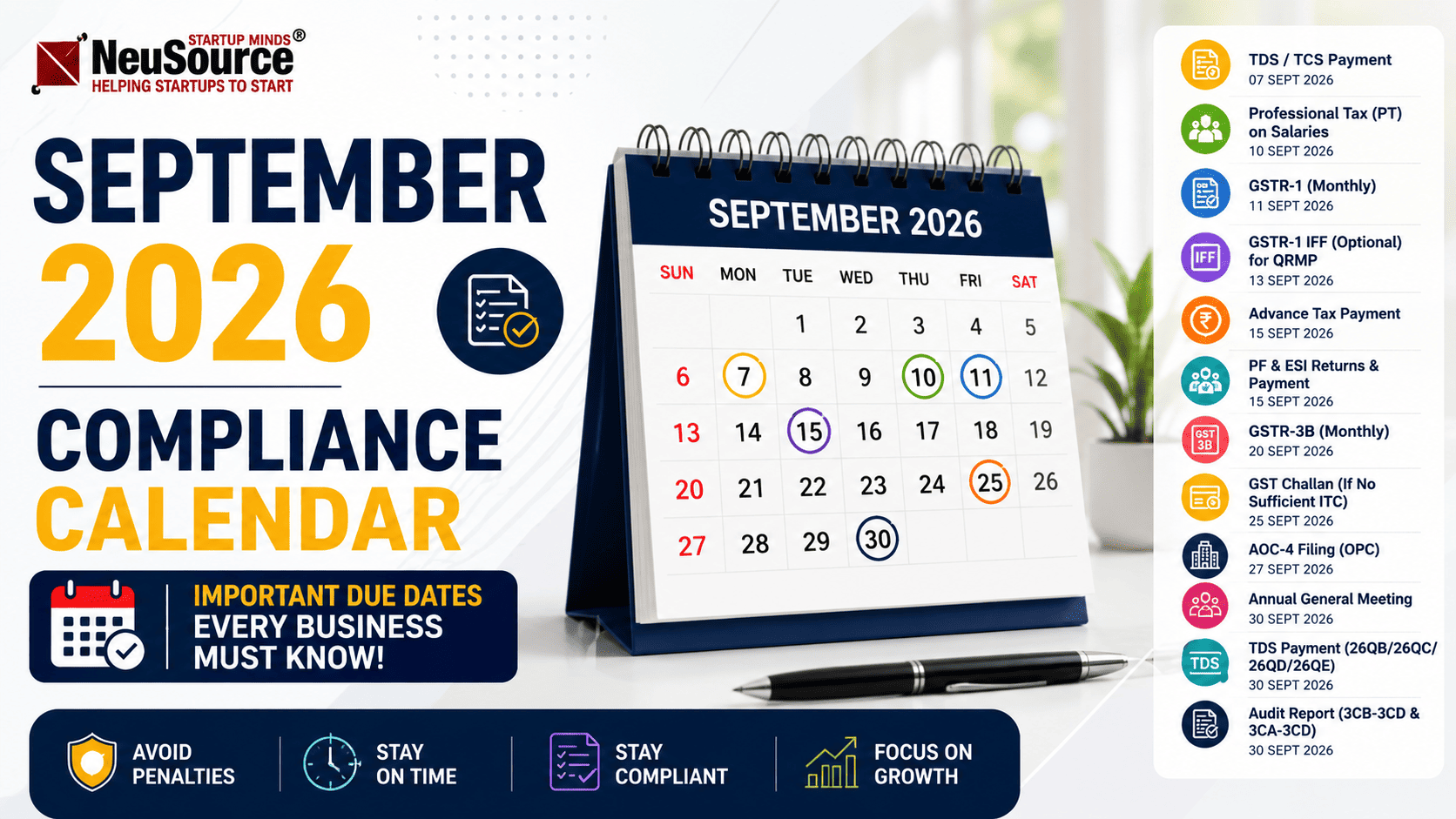
Tracking statutory compliance deadlines is critical for businesses, startups, and professionals to avoid penalties, interest, and unnecessary notices from authorities. February 2026 may appear shorter due to fewer working days, but it carries several important compliance obligations related to GST, TDS, PF, ESI, and Professional Tax.
Missing even one deadline can disrupt cash flow, block input tax credit (ITC), and increase audit risk. Below is a simplified and practical February 2026 compliance calendar covering key due dates that businesses must follow.
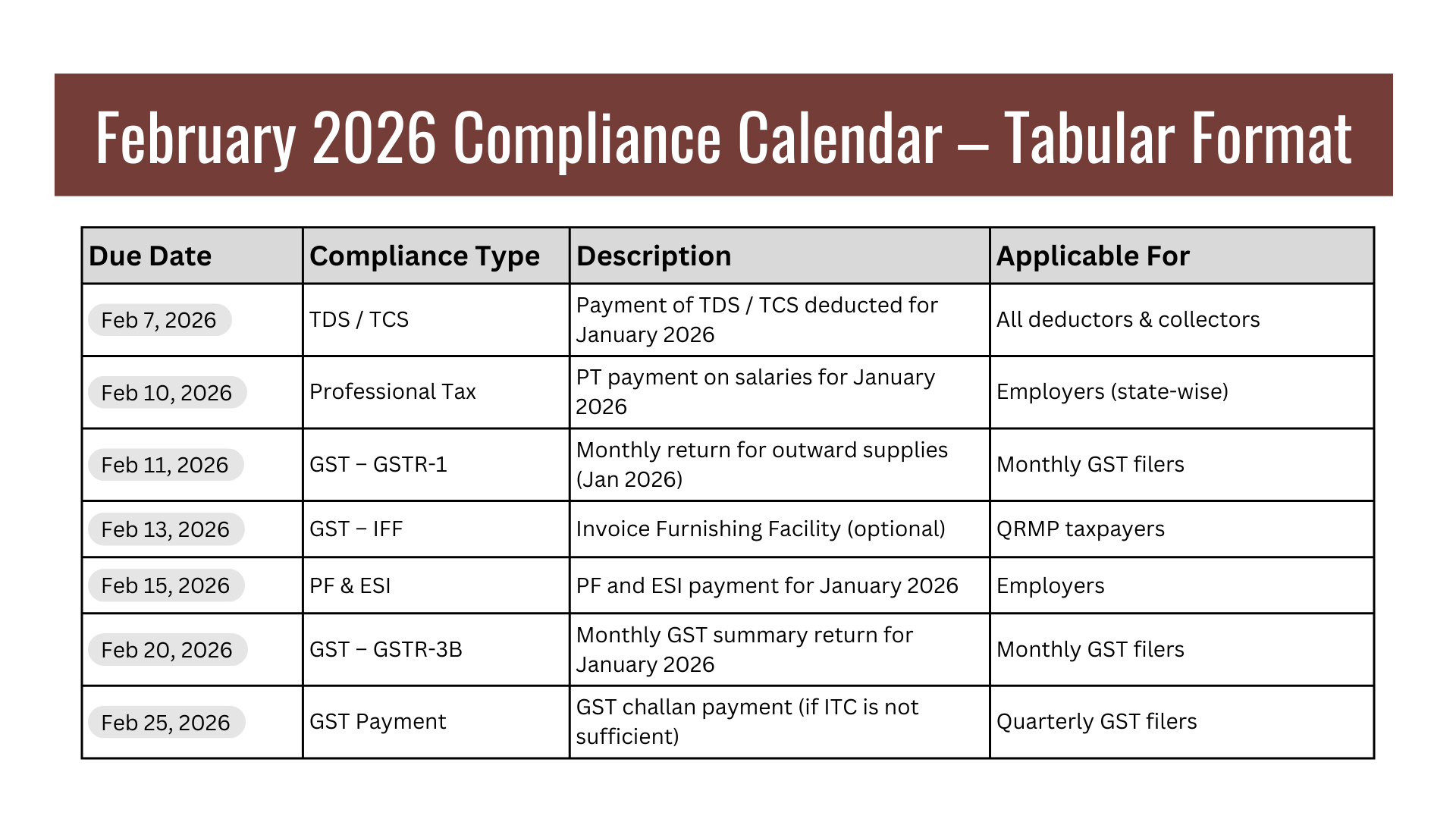
Professional Tax due dates differ across states in India. Employers must verify state-specific Professional Tax rules and deadlines to ensure accurate and timely compliance. Delays can result in penalties and interest imposed by state authorities.
Ignoring or delaying statutory filings can lead to serious consequences for businesses. Some common risks include:
For startups and growing businesses managing GST, payroll, and tax deductions together, compliance discipline is non-negotiable.
Even small delays, if repeated, can significantly increase compliance costs.
Manually tracking multiple compliance deadlines using spreadsheets or reminders increases the risk of missing important filings. A structured compliance calendar helps businesses:
For startups, founders, and finance teams, timely compliance is not just about avoiding penalties — it builds credibility and operational discipline.
February 2026 is a critical compliance month with multiple statutory deadlines across GST, TDS, PF, ESI, and Professional Tax. Staying organised and following a structured compliance calendar helps businesses operate smoothly and remain penalty-free.
If your business is scaling, compliance discipline is essential. Mark these dates, plan filings in advance, and ensure your finance and compliance teams stay aligned throughout the month.
03 Feb
The internet offers opportunity, but only strategy builds success. Don't just exist online—dominate. Choose Neusource to craft your digital footprint and lead your business to its peak.