India’s 1st Startup Consulting Company Earns YouTube Silver Button
India’s 1st Startup Consulting Company Earns YouTube Silver Button
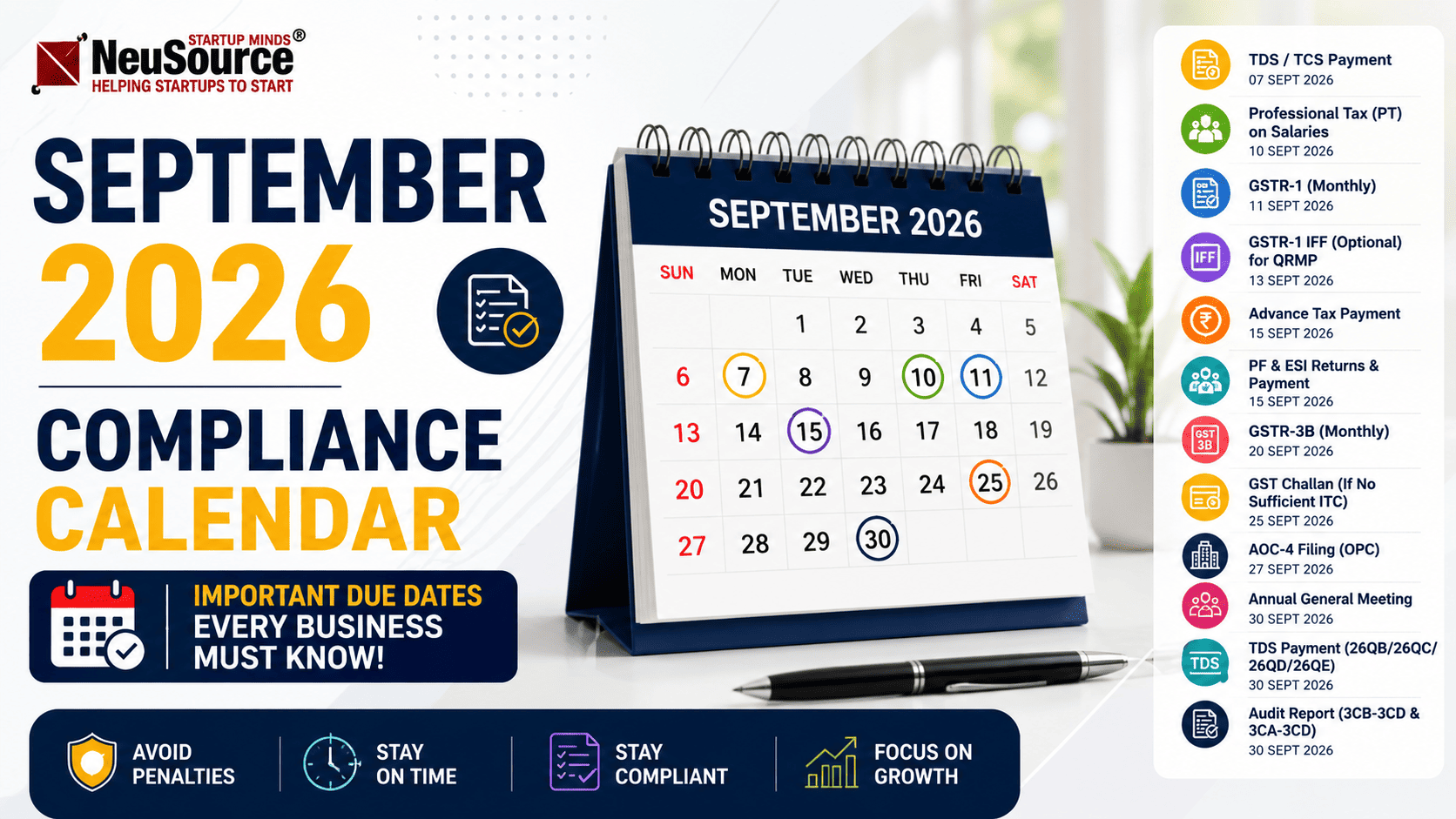
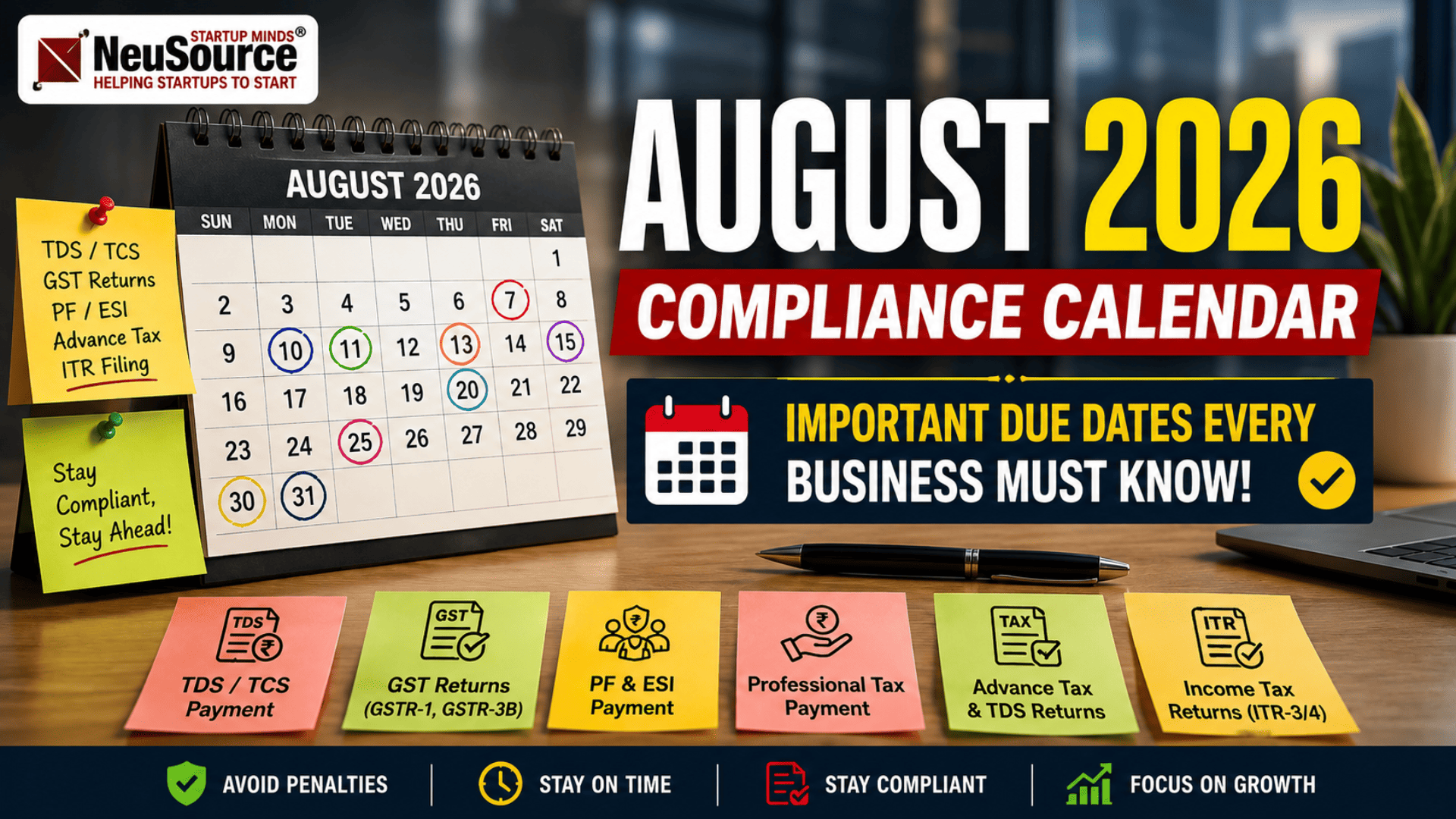
January 2026 is one of the most compliance-heavy months for startups, private limited companies, LLPs, and growing businesses in India. Contrary to the belief that the beginning of the year is relaxed, January brings a dense cluster of statutory deadlines across GST, TDS, PF-ESI, and ROC filings.
Missing even a single compliance date can lead to penalties, interest, loss of compliance score, and red flags during funding or due diligence. For founders and finance teams, January is not about reminders — it is about execution discipline.
As startups scale, compliance becomes directly linked to credibility. Investors, banks, and enterprise partners actively review:
January 2026 acts as a compliance checkpoint. Errors or delays during this month can impact funding conversations, credit facilities, and director eligibility.
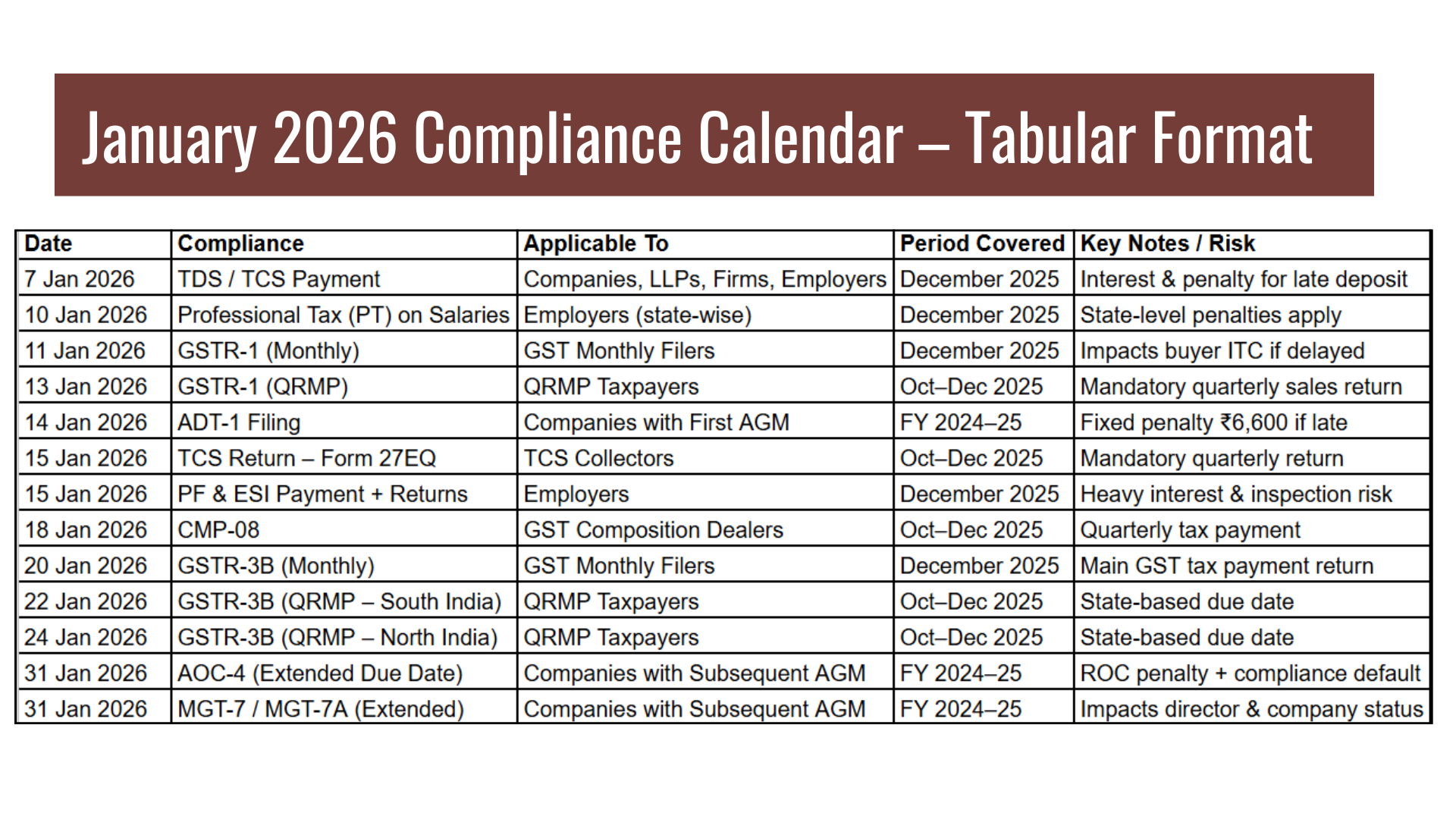
Businesses deducting tax at source must deposit TDS and TCS for December 2025 within the prescribed timelines. Delays attract interest, late fees, and potential notices from the Income Tax Department.
January includes GSTR-1, GSTR-3B, CMP-08 filings for both monthly and QRMP taxpayers. GST delays not only attract penalties but also block input tax credit (ITC) for customers, damaging business relationships.
PF and ESI payments and returns for December 2025 must be completed on time. Non-compliance can trigger:
January 2026 is especially important for companies due to the extended due date of 31 January 2026 for:
This extension applies to companies having a subsequent AGM. Missing these filings results in:
ADT-1 filing for auditor appointment is also critical for companies with their first AGM completed during the period.
For startups, compliance is no longer a back-office task. It directly influences:
January 2026 demands structured planning, timely execution, and professional oversight.
January 2026 is not for saving calendars — it is for following them. Founders who treat compliance as a system rather than a task stay penalty-free, investor-ready, and scalable.
Stay compliant. Stay structured. Stay ahead.
02 Jan
The internet offers opportunity, but only strategy builds success. Don't just exist online—dominate. Choose Neusource to craft your digital footprint and lead your business to its peak.