India’s 1st Startup Consulting Company Earns YouTube Silver Button
India’s 1st Startup Consulting Company Earns YouTube Silver Button
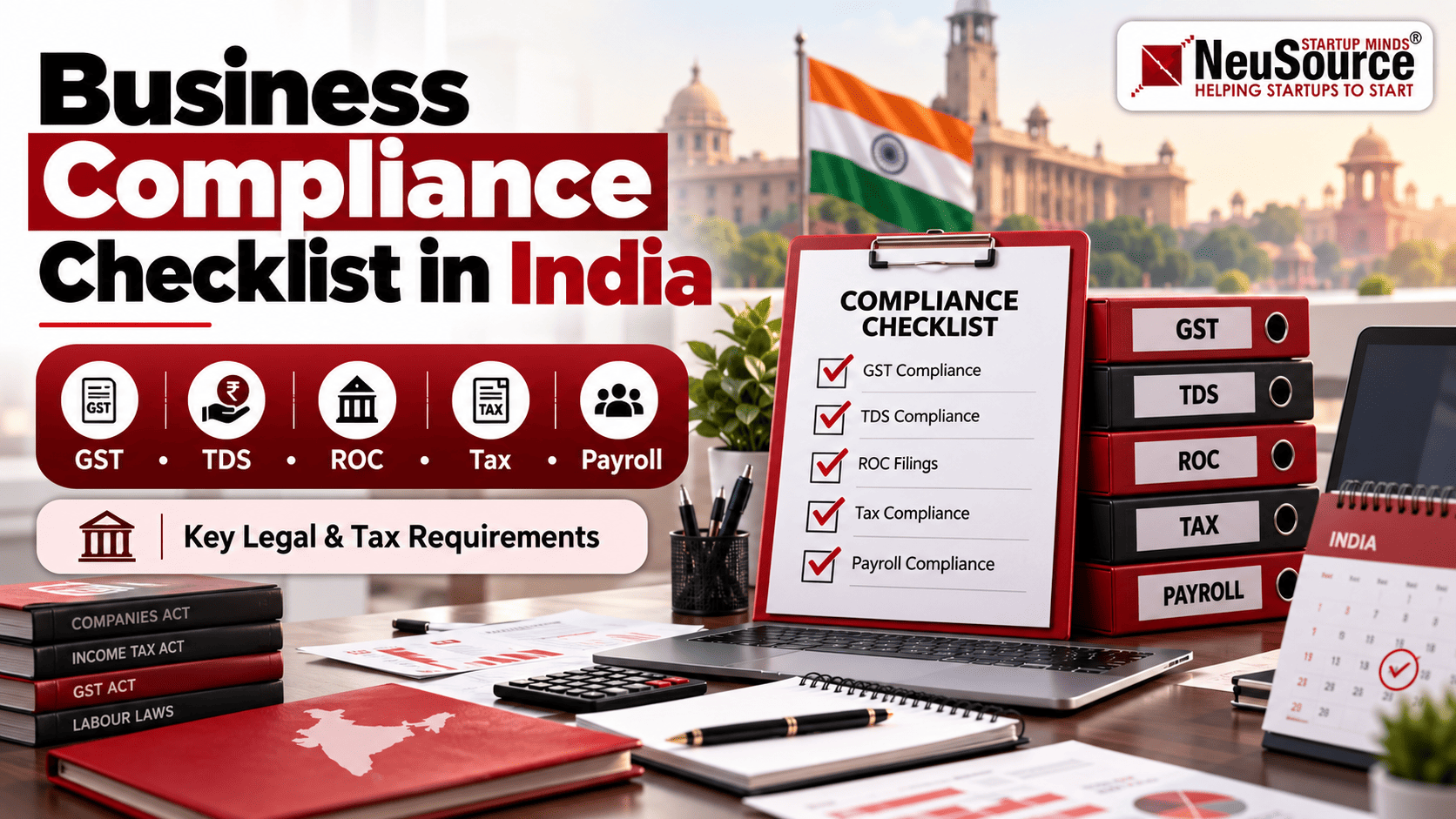
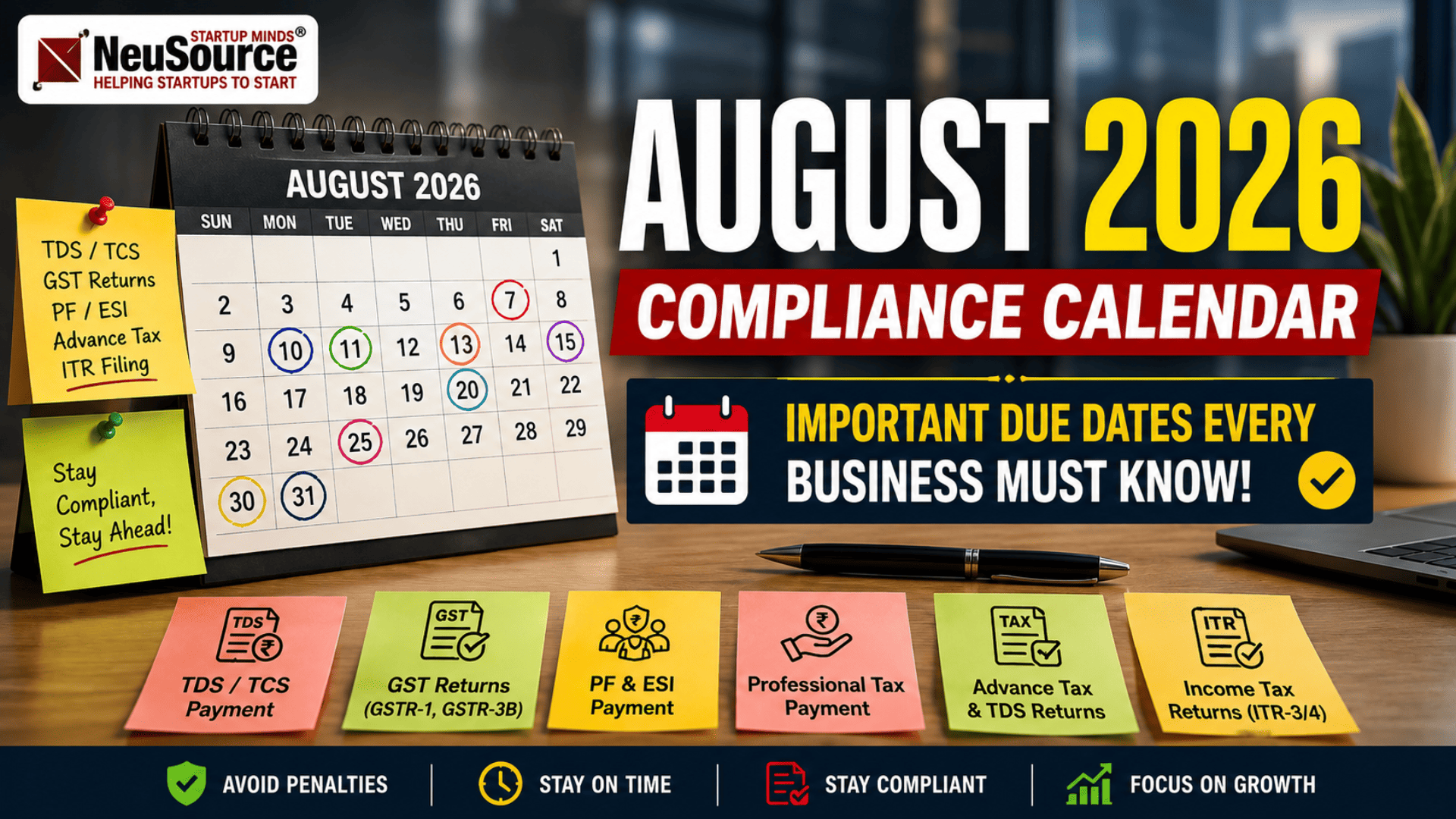
Running a business in India involves more than sales, operations and growth. Businesses also need to manage regular legal, tax and statutory compliances to avoid penalties, notices and filing-related issues.
The exact requirements may vary depending on the type of entity, turnover, number of employees, registrations and nature of business. However, there are some common areas that every business should monitor regularly.
Businesses registered under GST should ensure timely filing of applicable returns, correct invoicing and proper reconciliation of sales, purchases and input tax credit.
Important GST compliance areas include:
Businesses making or receiving specified payments may be required to deduct or collect tax under applicable provisions.
Key areas to monitor include:
Companies and other registered entities may have annual as well as event-based filing requirements with the Ministry of Corporate Affairs.
Changes relating to directors, registered office, share capital, auditors or other corporate details may also require separate filings.
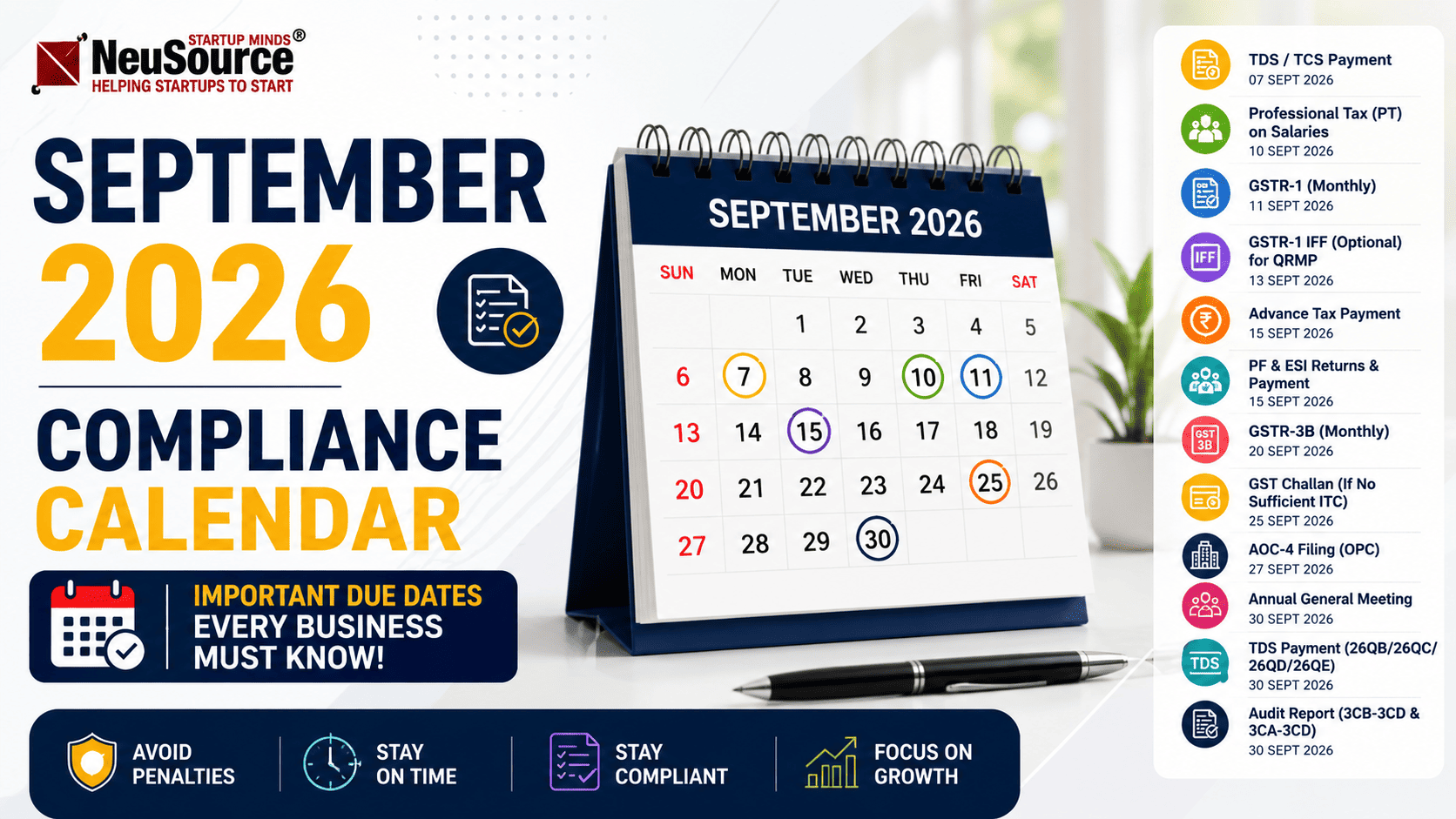
Businesses should maintain a compliance calendar so that ROC filings are tracked throughout the year instead of being handled at the last moment.
Businesses should regularly monitor their income-tax obligations, including applicable return filing, advance tax, audit requirements and related tax forms.
Proper accounting records and timely reconciliation can make income-tax filing easier and reduce the chances of mismatches or notices.
Businesses employing staff should also monitor payroll-related statutory obligations.
Depending on applicability, this may include:
Accurate bookkeeping is the foundation of good compliance management. Businesses should maintain proper records of income, expenses, invoices, assets, liabilities and banking transactions.
Well-maintained records also support audits, tax filings, financial reporting and business decision-making.
A structured compliance calendar helps businesses:
NeuSource Startup Minds India Limited supports businesses with GST, taxation, ROC filings, accounting, payroll-related compliance and other statutory requirements.
A structured compliance process can help businesses manage recurring filings and documentation more efficiently.
Business compliance should be treated as an ongoing process rather than a once-a-year activity.
GST, TDS, ROC filings, income tax, payroll and accounting records require regular attention. Businesses should identify the requirements applicable to them and maintain a clear compliance calendar to stay organised and avoid unnecessary filing issues.
Disclaimer: This article is for general informational purposes only. Compliance requirements may vary based on entity type, turnover, registrations, employee strength, business activity and applicable government notifications. Businesses should verify the latest requirements before filing.
03 Oct
The internet offers opportunity, but only strategy builds success. Don't just exist online—dominate. Choose Neusource to craft your digital footprint and lead your business to its peak.