India’s 1st Startup Consulting Company Earns YouTube Silver Button
India’s 1st Startup Consulting Company Earns YouTube Silver Button
Building a startup is rarely a straight line. Founders begin with an idea, validate a problem, build a product, find customers and eventually look for ways to grow. But somewhere between early traction and the next stage of growth, many startups face the same problem: they are working hard, but they are not moving forward fast enough.
The issue is not always a lack of effort. Sometimes the real problem is the absence of a clear strategy.
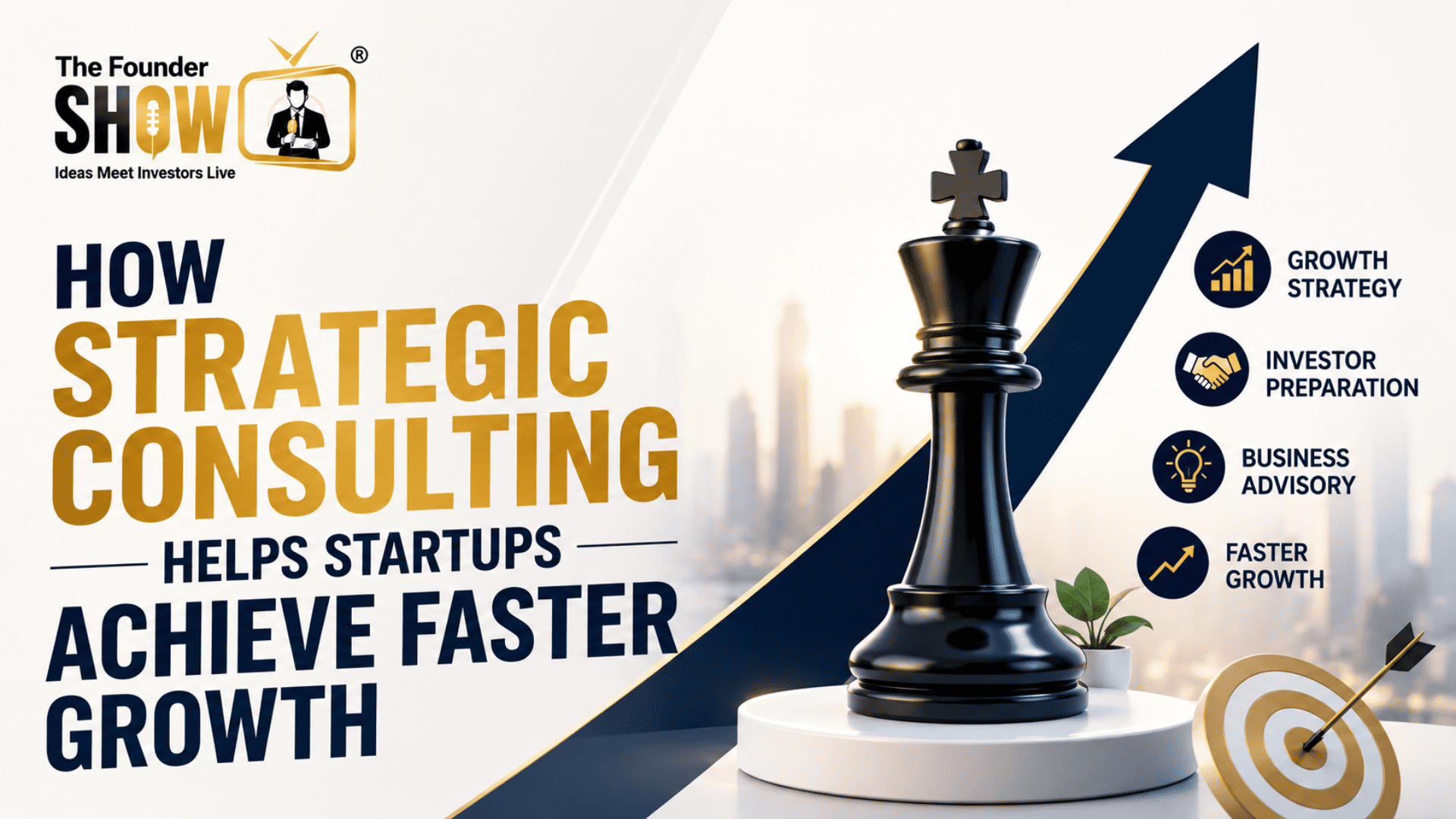
This is where strategic consulting for startups can make a meaningful difference. Instead of making decisions based only on assumptions, founders can use structured business advisory to understand their market, identify growth opportunities, strengthen operations, prepare for investors and create a practical roadmap for scaling.
For an early-stage startup, strategic consulting is not about handing over control of the business to an external consultant. It is about giving founders a clearer framework for making better decisions.
Strategic consulting is a structured approach to solving important business challenges and identifying opportunities for sustainable growth.
For startups, this can include areas such as:
A startup consultant does not simply tell a founder what to do. The objective is to understand where the business currently stands, identify gaps and develop a strategy that matches the startup's stage, resources and goals.
This distinction matters because a strategy that works for a funded growth-stage company may be completely unsuitable for a bootstrapped early-stage startup.
Founders often have deep knowledge of their product or industry. However, being close to the business can sometimes make it difficult to objectively identify weaknesses.
A founder may believe:
"We need more funding."
But after evaluating the business, the actual issue might be weak customer retention, unclear positioning, poor unit economics or an inefficient sales process.
Strategic consulting helps separate the symptom from the underlying problem.
Instead of immediately asking how to raise more money, founders can first ask:
Answering these questions before making major decisions can save both time and capital.
One of the biggest challenges for startups is trying to do everything simultaneously.
A founder may want to:
The problem is that startups have limited resources.
A growth strategy for startups helps founders determine what should happen first.
A practical growth strategy may define:
This creates a roadmap instead of a collection of disconnected activities.
A good product does not automatically create a successful startup.
The market must have enough demand, the customer must have a genuine problem and the startup must have a realistic way to reach those customers.
Strategic business advisory can help founders examine:
This helps answer a critical question:
The difference can determine whether a startup achieves sustainable growth or struggles to gain traction.
Revenue alone does not necessarily mean a startup has a healthy business.
A startup may generate sales while still losing money on every customer. Another may have impressive user numbers but no clear path to monetization.
Strategic consulting can help founders examine the economics behind the business.
Important areas include:
The objective is not simply to increase revenue. It is to understand whether growth itself is economically sustainable.
For startups planning to raise capital, preparation should begin well before the investor meeting.
Investors typically want to understand more than the startup's idea. They want to know whether the business has the potential to generate meaningful returns relative to the risks involved.
This makes investor preparation an important part of strategic consulting.
Founders may need to strengthen:
A consultant or advisor can also challenge assumptions before investors do.
That is valuable because discovering a weakness during an internal review is far better than discovering it during an investor pitch.
A startup can have a strong business but still deliver a weak pitch.
Common problems include:
A strategic review can help simplify the story.
An effective investor pitch should make it easy to understand:
The goal is not to make the pitch sound impressive. The goal is to make the business easy to understand and evaluate.
Some startup mistakes are relatively cheap to fix. Others can consume months of time and significant amounts of capital.
Examples include:
Strategic consulting provides an external perspective that can challenge these decisions before they become expensive problems.
That outside perspective can be particularly useful when founders are emotionally attached to a product, market or business assumption.
Growth can create new problems.
A startup that handles 100 customers successfully may struggle when it reaches 10,000. Processes that work with five employees may break down with 50.
Strategic consulting can help founders prepare for this transition by examining:
The objective is to create systems that can support growth without allowing operational complexity to grow faster than the business itself.
Founders have to make decisions with incomplete information. That is part of entrepreneurship.
But there is a difference between taking calculated risks and making decisions based entirely on assumptions.
Strategic advisory encourages founders to establish measurable indicators.
For example, instead of saying:
"Our marketing is performing well."
A founder should know:
Similarly, instead of saying:
"Customers love our product."
The startup should be able to demonstrate this through retention, repeat purchases, reviews, referrals or other meaningful indicators.
Data does not eliminate uncertainty, but it makes decisions more informed.
Being investor-ready means more than having a pitch deck.
A startup should be prepared to answer difficult questions about its business.
Investors may want to understand:
Strategic consulting can help founders prepare for these questions and identify gaps before approaching investors.
This can make the fundraising process more focused and professional.
A startup needs more than a long-term vision. It needs measurable milestones.
A practical roadmap can divide growth into different stages.
Examples may include:
These may include:
These may involve:
The exact roadmap depends on the startup. There is no universal formula for growth.
There is no single stage at which every startup needs consulting.
However, strategic support can become particularly valuable when a founder is:
Importantly, consulting should not become another expense without measurable value.
Founders should clearly define what problem the consultant is expected to solve and what outcome will indicate success.
These terms are often used interchangeably, but they are not exactly the same.
Mentorship generally involves guidance based on experience. A mentor may share lessons, perspectives and recommendations based on their own entrepreneurial journey.
Strategic consulting is usually more structured and problem-focused. It involves analysing a specific business situation, identifying gaps and developing recommendations or an actionable strategy.
Both can be valuable.
In fact, startups can benefit from combining mentorship, strategic consulting, investor feedback and structured evaluation rather than relying on just one source of guidance.
Consulting works best when founders are willing to confront uncomfortable facts.
Before engaging an advisor, founders should prepare:
Most importantly, founders should be willing to hear that an assumption may be wrong.
The purpose of strategic consulting is not to validate everything the founder already believes.
It is to help the founder make better decisions.
Strategic consulting becomes even more useful when combined with opportunities for real-world feedback.
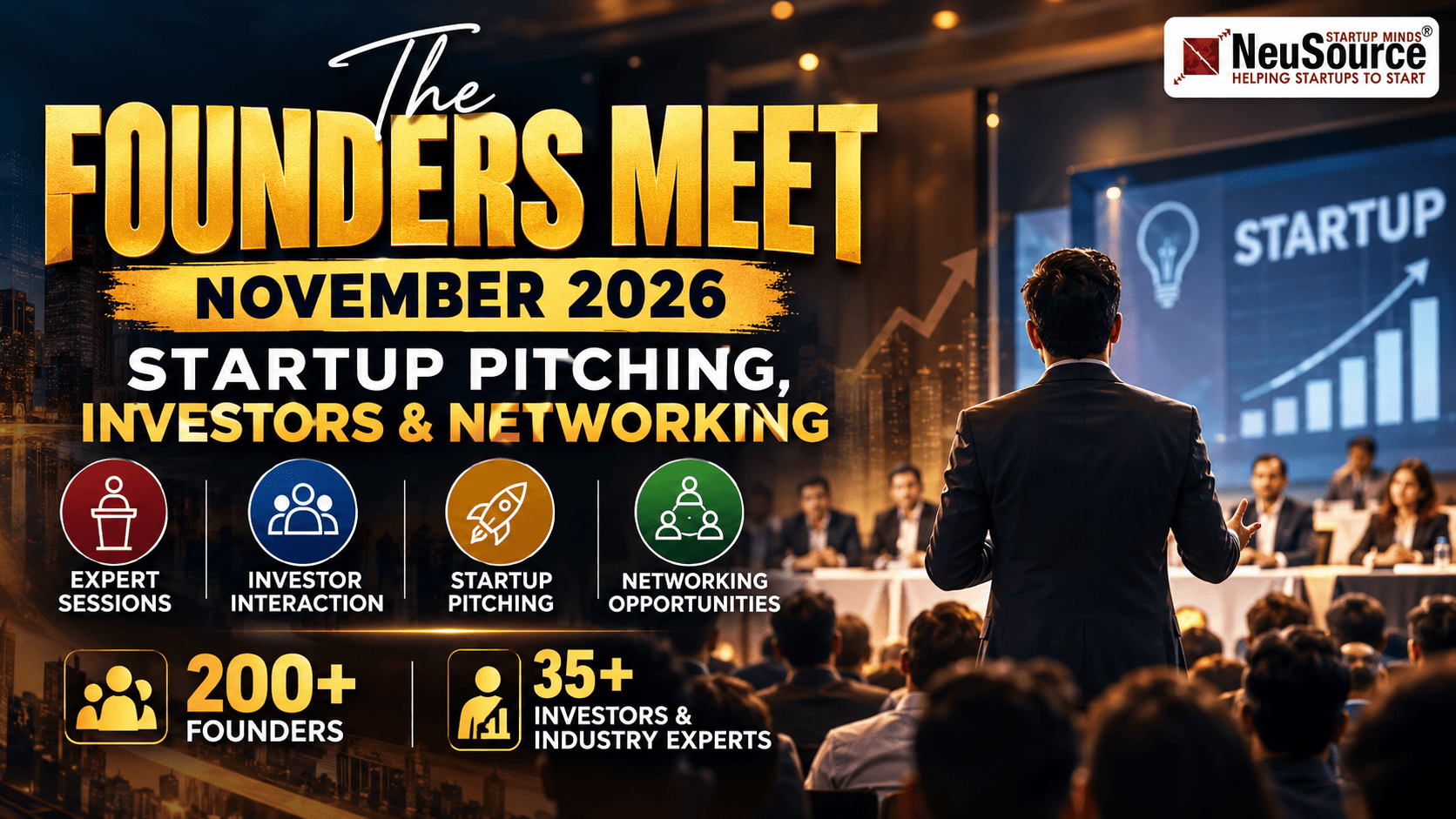
Platforms such as The Founders Meet can provide founders with a structured environment to present their startup, interact with investors and mentors, and receive feedback.
For founders preparing to raise capital, this type of ecosystem exposure can help reveal questions and weaknesses that may not be obvious when preparing alone.
The objective should not simply be to get in front of investors.
It should be to become more prepared before getting in front of them.
Fast growth does not come from doing more things. It often comes from doing the right things in the right order.
Strategic consulting can help startups identify priorities, validate assumptions, strengthen their business model, improve operations, prepare for fundraising and build a practical growth roadmap.
For founders in India, where the startup ecosystem continues to become increasingly competitive, having a good idea is only the starting point. Execution, market understanding, financial discipline and investor readiness can make a significant difference.
The right strategic advice will not guarantee funding or business success. What it can do is help founders make better-informed decisions, avoid preventable mistakes and build a stronger foundation for growth.
And sometimes, that clarity is exactly what a startup needs before taking its next big step.
If you are preparing your startup for growth or fundraising, getting structured feedback before approaching investors can help you identify gaps early.
Explore The Founders Meet to learn how you can showcase your startup, interact with the startup ecosystem and work toward becoming more investor-ready.
27 Aug
The internet offers opportunity, but only strategy builds success. Don't just exist online—dominate. Choose Neusource to craft your digital footprint and lead your business to its peak.