India’s 1st Startup Consulting Company Earns YouTube Silver Button
India’s 1st Startup Consulting Company Earns YouTube Silver Button
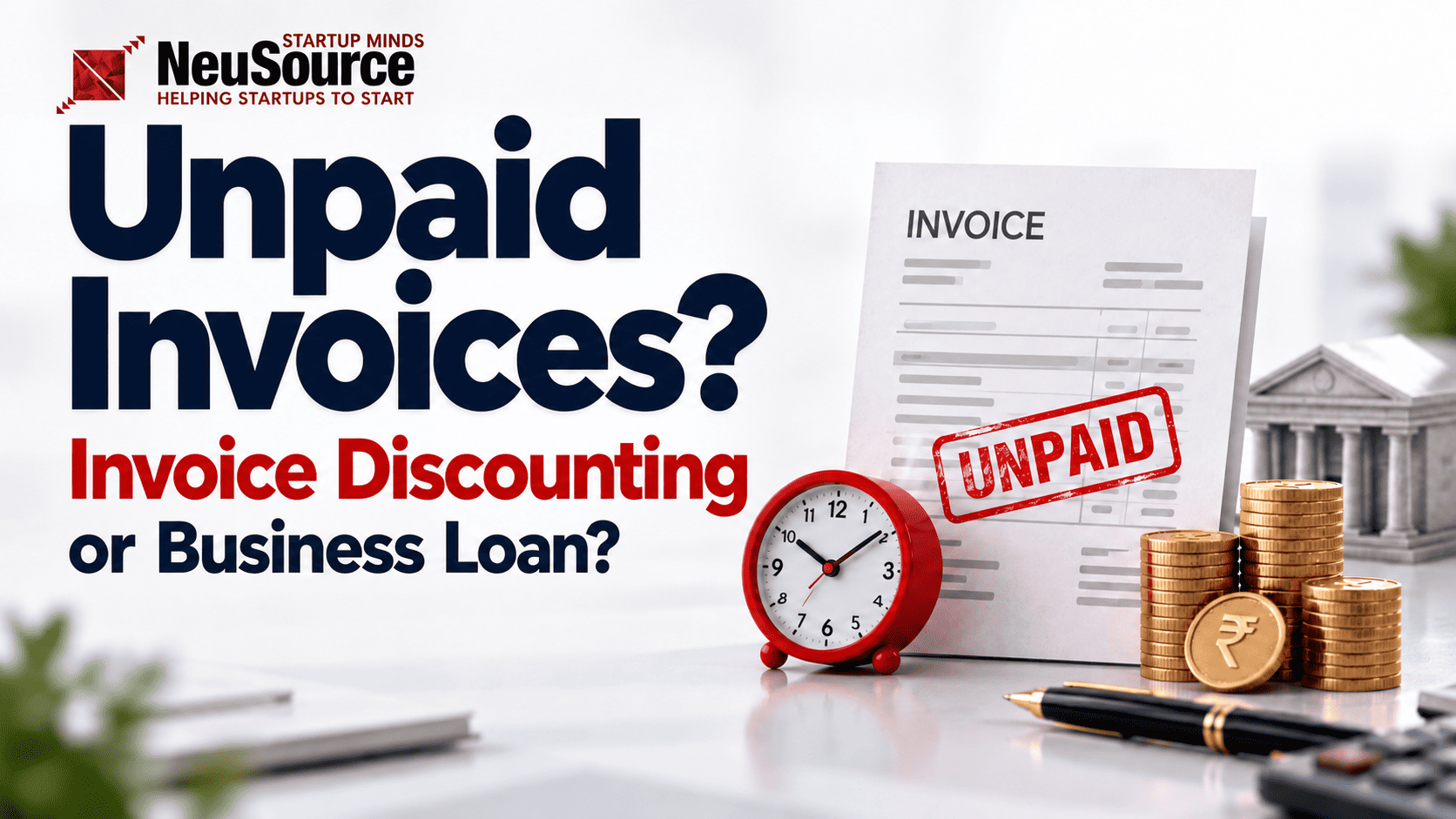
Unpaid invoices can leave a profitable business struggling to pay salaries, suppliers and rent. When customers take weeks to settle bills, choosing the right funding becomes essential. The invoice discounting vs working capital loans decision depends on whether you need cash against specific receivables or broader support for everyday operations.
Invoice discounting generally suits eligible invoices awaiting payment. A working capital loan suits wider operating expenses. Neither is automatically cheaper or easier. Compare the actual funding period, total charges, customer reliability and repayment obligations before choosing.
Invoice discounting is a form of receivables financing that helps businesses access money against eligible unpaid invoices before customers pay. The financier evaluates the transaction and relevant credit risks, then releases funds according to the agreed terms.
For example, a manufacturer awaiting payment on a ₹5 lakh invoice might use invoice financing to purchase materials for its next order. The amount released depends on the facility, deductions and invoice eligibility. Customer payment then settles the financed receivable under the arrangement.
However, an unpaid invoice is not automatically financeable. Disputed bills, overdue receivables or invoices involving unacceptable buyers may be rejected. Approval depends on the financier’s requirements.
A working capital loan provides funding for short-term business expenses, such as inventory, wages and supplier payments. Unlike invoice discounting, it does not necessarily depend on financing a particular customer invoice.
Working capital finance can include a short-term loan, overdraft or cash credit facility. A loan may involve scheduled instalments, while revolving facilities permit borrowing within an approved limit. Interest, renewal requirements and repayment conditions vary by product.
| Factor | Invoice Discounting | Working Capital Loans |
|---|---|---|
| Funding basis | Eligible trade receivables | Business credit assessment and facility terms |
| Best use | Bridging specific invoice payment gaps | Covering broader operational needs |
| Repayment | Linked to financed invoice settlement | Instalments or agreed facility obligations |
| Main limitation | Requires acceptable invoices and buyers | Requires sufficient repayment capacity |
Invoice discounting costs may include discount charges, processing fees and platform charges. Working capital loans may involve interest, processing fees, renewal costs and other contractual charges. Compare the total rupee cost for the same usable amount and borrowing period.
Consider an illustrative ₹5 lakh advance carrying a 2% charge for 60 days: the charge is ₹10,000 before additional fees. That 2% is not an annual interest rate. Check whether charges are deducted upfront, because receiving less cash increases the effective borrowing cost.
Invoice financing providers may request invoices, purchase orders, delivery evidence, buyer acceptance, bank statements and business identification documents. Buyer payment history and invoice authenticity can significantly affect approval.
Working capital lenders may assess turnover, banking activity, existing debt, credit history and financial statements. GST returns, tax returns and security documents may also be required. Neither option guarantees approval, and collateral requirements depend on the particular facility.
India’s Trade Receivables Discounting System, or TReDS, facilitates financing of MSME trade receivables through participating financiers. Buyer acceptance is part of the process, and financiers submit bids for eligible receivables.
According to RBI guidance, TReDS transactions are without recourse to the MSME seller for buyer default. Do not assume every invoice discounting arrangement offers this protection. Outside TReDS, review the agreement carefully to understand who bears non-payment risk.
Choose invoice discounting when your immediate shortage comes from genuine, eligible invoices and customers have a dependable payment record. It can align funding with a specific receivables cycle.
Consider working capital finance when expenses extend beyond existing invoices, such as seasonal inventory purchases or recurring operating commitments. Match repayments to realistic cash inflows. Borrowing repeatedly to cover continuing losses can deepen financial pressure.
Not always. Acceptance depends on invoice age, disputes, buyer quality and provider rules.
No. Compare fees and financing duration against the alternative loan’s total cost.
Some are; others require collateral or guarantees. Check the specific sanction terms.
Contract terms determine liability. TReDS financing is without recourse to MSME sellers for buyer default.
Potentially, subject to lender consent and security arrangements. Avoid financing the same invoice twice.
No. Clear credit terms, accurate invoices and consistent collections remain essential.
The invoice discounting vs working capital loans choice starts with identifying your cash flow gap. Use eligible receivables financing for invoice-linked needs and assess working capital finance for broader requirements. Obtain written quotations, check default liability and consult a qualified adviser before committing.
29 Oct
The internet offers opportunity, but only strategy builds success. Don't just exist online—dominate. Choose Neusource to craft your digital footprint and lead your business to its peak.